Why Job Seekers Need Multiple Resumes in 2026

A tailored resume is defined as a version specifically written to match the requirements, keywords, and priorities of a single job posting or role family. Job seekers who send the same generic resume to every opening leave real opportunity on the table. Tailored resumes generate 200–300% more callbacks than generic ones. That single fact explains why job seekers need multiple resumes more than any other argument. The good news is that building a multi-resume strategy does not mean rewriting your resume from scratch every time. With the right setup, each new application starts 80% pre-finished, leaving only small final tweaks before you hit send.
Why job seekers need multiple resumes to get more callbacks
Recruiters spend about 7 seconds reviewing a resume before deciding whether to read further. That is not enough time to decode a generic document and figure out whether you are a fit. Your resume has to make the match obvious in the first glance.

A tailored resume puts your most relevant qualifications at the top, using the exact language from the job posting. A generic resume buries relevant experience under unrelated roles and uses vague language that does not trigger recognition. The difference in recruiter response is not subtle.
Here is what changes when you tailor a resume for a specific role:
- Job title and summary: Mirrors the language in the posting, signaling an immediate match.
- Skills section: Lists only the skills the employer asked for, ranked by relevance.
- Work experience bullets: Leads with accomplishments that directly address the job’s core requirements.
- Keywords: Reflects the exact terms the job description uses, which also helps pass ATS filters.
ATS systems favor resumes that clearly reflect job description keywords. A resume optimized for one role family will score far higher in an ATS than a catch-all document. Jobalign reports an 87% ATS pass rate for resumes built through its platform, compared to the industry average where approximately 75% of resumes are rejected before a human ever reads them.
How to build and manage multiple resume versions efficiently
The most common mistake job seekers make is treating every application as a blank-slate rewrite. That approach burns hours and leads to burnout fast. The smarter method is to build 3–5 core resumes, each targeting a distinct job cluster, and then make small final tweaks per application.
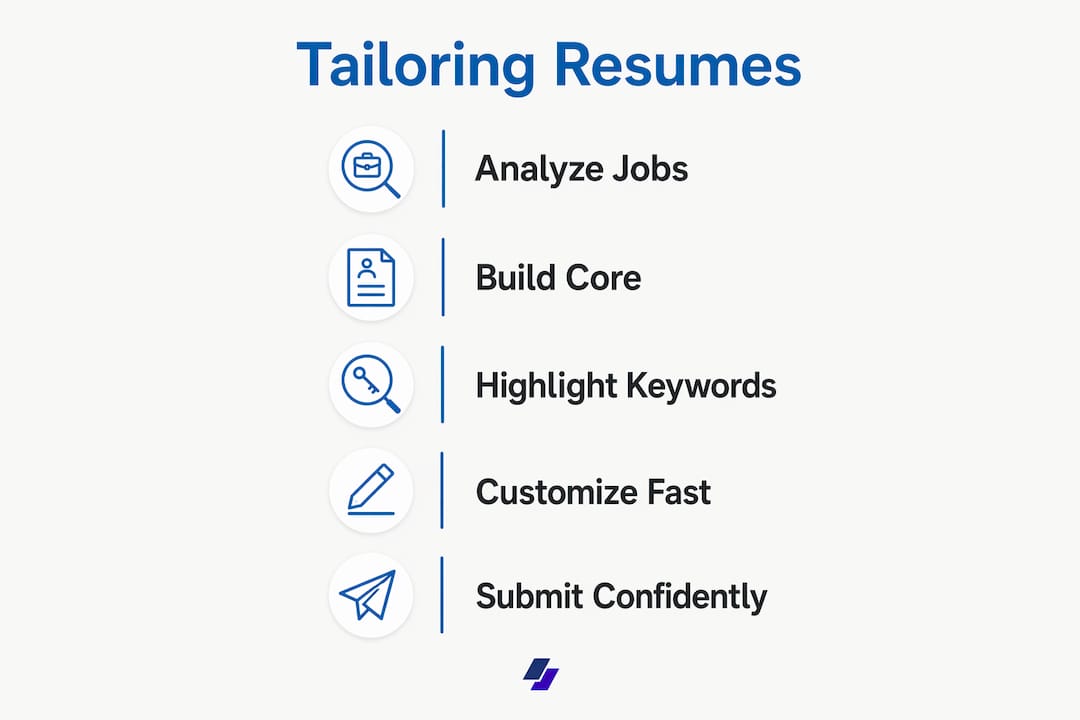
Different employers require different qualifications even within the same job title. A “marketing manager” role at a startup and one at a Fortune 500 company will prioritize completely different skills. Building separate core resumes for each cluster solves this problem at scale.
Follow these steps to set up your multi-resume system:
- Audit your last 20 job applications. Group the roles you applied for into clusters based on shared skills, industries, or seniority levels. Most job seekers find 3–4 natural clusters when they do this exercise honestly.
- Build one core resume per cluster. Each version gets its own summary statement, skills section, and prioritized work experience bullets. The underlying facts stay the same. The framing and emphasis change.
- Label and save each version clearly. Use a naming convention like “Resume_ProjectManager_Tech” or “Resume_ContentWriter_B2B” so you can find the right base file instantly.
- Update all versions together. When you add a new job or certification, update every core resume at the same time. This prevents versions from drifting out of sync.
- Do a final 5-minute tweak per application. Swap in the company name, adjust one or two bullets to match the specific posting, and confirm the keywords align.
Pro Tip: Before you build your core resumes, run a quick keyword analysis on five job postings in each cluster. Identify the three to five terms that appear in all five. Those are your anchor keywords for that resume version.
Job seekers spend an average of 1 hour updating their resume per application. A pre-built multi-resume system cuts that to under 60 seconds for the final tweak. The upfront setup takes a few hours, but the long-term savings are significant.
Custom resumes vs. a single generic resume
The choice between one generic resume and multiple tailored versions is not really a debate. The data is clear. But understanding the trade-offs helps you commit to the right approach with confidence.
| Factor | Single generic resume | Multiple tailored resumes |
|---|---|---|
| Callback rate | Baseline | 2–3x higher |
| ATS pass rate | Lower, misses role-specific keywords | Higher, mirrors job description language |
| Time per application | 45–60 minutes of editing | Under 60 seconds of final tweaks |
| Recruiter engagement | Low, requires effort to decode fit | High, match is immediate and obvious |
| Freelancer flexibility | Poor, blends unrelated projects | Strong, each version tells a focused story |
Freelancers face a specific version of this problem. A freelance writer who also does content strategy and SEO audits cannot present all three services equally on one resume without confusing the reader. Separate resumes help freelancers present a consistent, focused career narrative for each type of contract role they pursue. The benefits of multiple resume versions for freelancers go beyond callbacks. They also build credibility by showing depth in one area rather than spreading thin across many.
Keeping multiple resumes aligned with your LinkedIn profile and portfolio materials also improves employer trust. When your resume, LinkedIn, and work samples all tell the same story for a given role, the employer sees a coherent professional, not a generalist scrambling to fit in.
How to tailor each resume version quickly for a specific job posting
Once your core resumes are built, the final customization step should take no more than 5–10 minutes. The goal is precision, not a full rewrite. You are adjusting emphasis, not changing facts.
Here is what to focus on for each application:
- Read the job description once for requirements, once for language. The first pass tells you what they need. The second pass tells you how they talk about it. Mirror their language in your summary and bullets.
- Prioritize the top three bullet points in the job description. These are the non-negotiable requirements. Make sure your resume addresses each one directly, ideally in the first half of the document.
- Swap the summary statement. Your core resume has a general summary for the cluster. For each application, write two sentences that speak directly to this company’s specific need.
- Check your keywords against the posting. Scan your resume for the five most important terms from the job description. If any are missing, add them naturally into existing bullets.
- Verify your job title alignment. If the posting uses “Senior Content Strategist” and your title was “Content Manager,” consider adding the industry-standard equivalent in parentheses where appropriate.
Pro Tip: Copy the job description into a plain text document and bold every skill or qualification mentioned more than once. Those repeated terms are the recruiter’s highest priorities. Make sure each one appears at least once in your tailored resume.
The resume customization workflow matters as much as the content itself. A well-structured process means you spend your energy on quality, not on figuring out where to start. Tools that sync with your LinkedIn profile can pull your experience automatically, so you are not retyping the same facts across five different files. Jobalign does exactly this, generating a tailored, ATS-optimized resume from your LinkedIn data in minutes.
Key takeaways
Multiple tailored resumes consistently outperform a single generic resume by generating more callbacks, passing ATS filters at higher rates, and saving job seekers significant time per application after the initial setup.
| Point | Details |
|---|---|
| Callback rate advantage | Tailored resumes produce 2–3x more callbacks than generic versions. |
| ATS keyword matching | Role-specific resumes mirror job description language and pass ATS filters more reliably. |
| Time savings after setup | Pre-built core resumes reduce per-application editing from 1 hour to under 60 seconds. |
| Optimal number of versions | Most job seekers need 3–5 core resumes covering distinct job clusters. |
| Freelancer benefit | Separate resume versions help freelancers present focused narratives for each contract type. |
The real cost of sending the same resume everywhere
I have reviewed hundreds of job applications over the years, and the pattern is always the same. The candidates who struggle longest are not the least qualified. They are the ones sending one resume to every role, wondering why nothing sticks.
The uncomfortable truth is that a generic resume signals low effort to a recruiter, even when the candidate is genuinely strong. Recruiters are not paid to decode potential. They are paid to find the closest match to a specific job description, fast. A resume that does not immediately reflect that match gets skipped.
What I have seen work, consistently, is treating your resume as a living document portfolio rather than a single static file. The job seekers who get callbacks fastest are the ones who spent a Sunday afternoon building three solid core resumes and then spend five minutes per application making final adjustments. That upfront investment pays back within the first week of active applications.
The one pitfall I see most often is over-customization. Some job seekers get so deep into tailoring that they start fabricating emphasis or stretching their experience to fit a role they are not actually qualified for. That backfires in interviews. The goal is to surface the most relevant parts of your real experience, not to reinvent yourself for every posting.
Approach your resumes the way a good editor approaches a manuscript. The core story does not change. The framing, the emphasis, and the language adapt to the audience. That discipline, applied consistently, is what separates the candidates who get interviews from the ones who keep waiting.
— Johan
How Jobalign helps you build tailored resumes without the grind
Building and managing multiple resume versions manually takes real time. Jobalign removes most of that friction by syncing directly with your LinkedIn profile and generating tailored, ATS-ready resumes for each job you apply to.
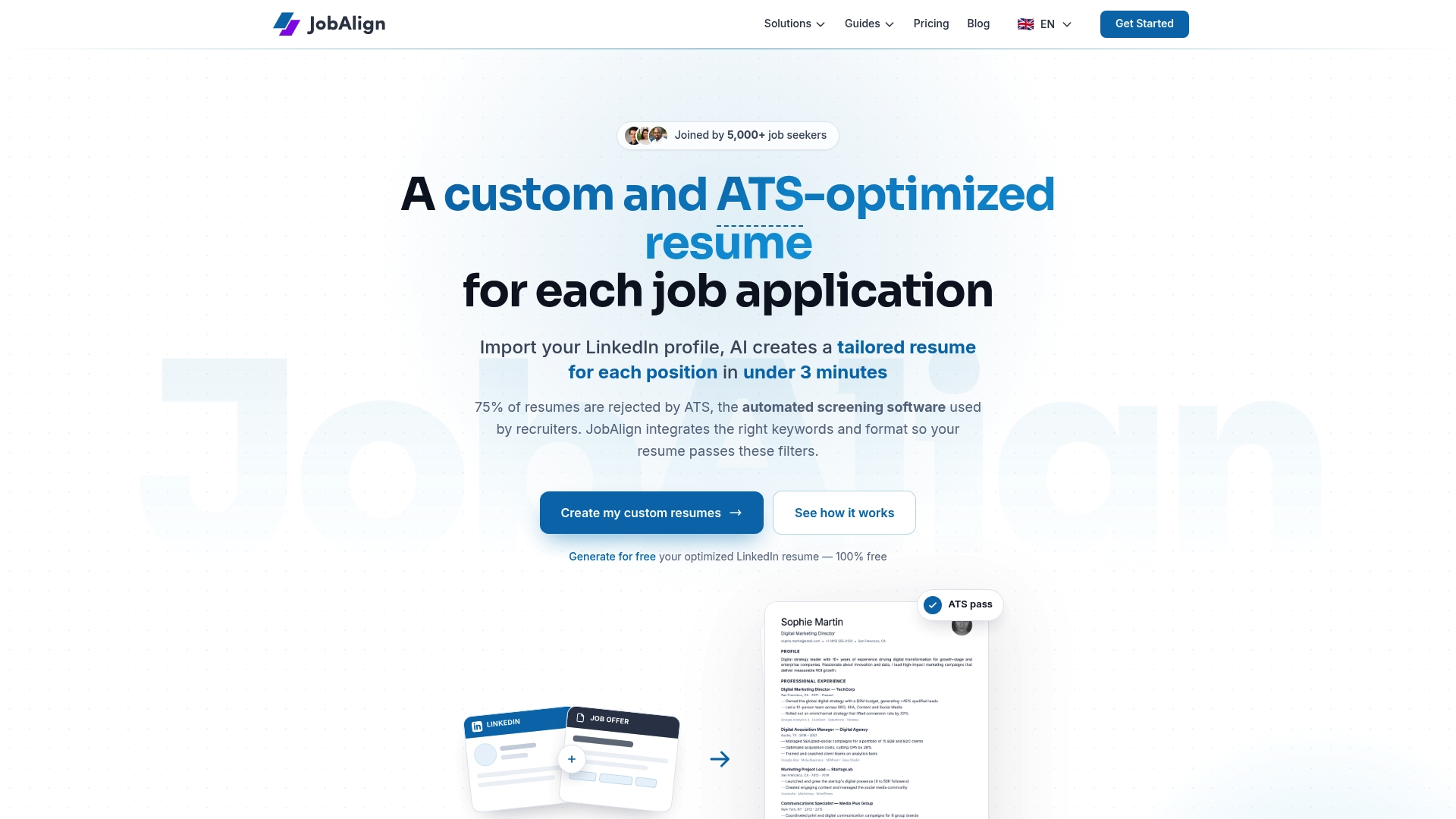
You connect your LinkedIn profile once. Jobalign extracts your experience, skills, and accomplishments, then builds a custom resume for each application with the right keywords already in place. No complicated setup. No retyping the same work history across five files. The platform’s 87% ATS pass rate means your resume reaches a human recruiter far more often than a manually built generic version would. If you want to see what a properly tailored resume looks like for your specific background, browse resume examples by job to get a clear picture before you start.
FAQ
Why do job seekers need multiple resumes?
Tailored resumes generate 2–3 times more callbacks than generic ones because they match the specific language and requirements of each job posting. A single generic resume cannot simultaneously prioritize the right skills for different role families.
How many resumes should I have?
Most job seekers benefit from maintaining 3–5 core resumes, each targeting a distinct job cluster based on shared skills or industries. Candidates typically identify 3–4 natural clusters when they review their recent application history.
Do I need multiple resumes if I am a freelancer?
Yes. Freelancers who pursue different types of contract work need separate resume versions to present a focused, credible narrative for each service area. Mixing unrelated projects on one resume dilutes the story and reduces recruiter confidence.
Does tailoring a resume really help with ATS?
Tailored resumes pass ATS filters at significantly higher rates because they reflect the exact keywords from the job description. Generic resumes miss role-specific terms and score lower in automated screening systems.
How long does it take to tailor a resume once core versions are built?
After building your core resumes, final tailoring per application takes under 60 seconds on average. The upfront setup takes a few hours but eliminates the 45–60 minutes most job seekers currently spend editing per application.